Most of us are natural givers. We jump in to help without thinking twice, say “yes” even when we’re already stretched thin, and push ourselves to go the extra mile for the people we care about. But if you’ve ever ended a day feeling drained, a little resentful, or like no one even noticed your effort… you might be stuck in a pattern of over-giving.
Overgiving happens when we give more than we realistically can — not just once, but as a way of life. And while generosity is beautiful, doing it without limits can slowly drain your energy, damage your health, and leave you disconnected from yourself.
The good news? You can stay compassionate and protect yourself by setting healthy boundaries.
Disclosure: Some of the links in this post are affiliate links. That means if you click a link and make a purchase or investment, I may earn a small commission at no extra cost to you. I only recommend platforms I personally use or believe provide real value. Please do your own research before making financial decisions.
Why Overgiving Hurts You (and Your Relationships)
When you give too much without replenishing yourself, you’re not just harming your own well-being — you’re also impacting the quality of your relationships. Overgiving often leads to:
- Resentment: You start feeling unappreciated, which can strain your connections.
- Burnout: Physical and emotional exhaustion make it harder to be present for others.
- Loss of Self: Your identity becomes wrapped up in what you do for others, not who you are.
- Unbalanced Relationships: People may come to expect your constant giving without offering support in return.
What Boundaries Really Are
Boundaries are not walls. They are guidelines you set to protect your energy, time, and emotional health. They create a clear understanding between you and others about what you are — and are not — willing to do.
Healthy boundaries:
- Are clear, direct, and respectful.
- Protect your ability to give from a place of joy, not obligation.
- Build mutual respect in relationships.
Signs You May Need Stronger Boundaries
- You feel guilty saying “no,” even when you’re exhausted.
- You regularly put your own needs last.
- You feel resentful after helping.
- You agree to things out of fear of conflict.
- You have little time left for yourself.
If any of these sound familiar, it’s time to take a closer look at your boundaries.
How to Start Protecting Yourself from Overgiving
1. Notice Your Energy Zappers
Write down situations, people, or commitments that leave you feeling drained. This awareness is the first step toward change.
2. Practice Saying “No” Without Over-Explaining
You don’t owe anyone a long justification for protecting your well-being. Simple statements like, “I can’t commit to that right now” are enough.
3. Create a Personal Self-Care Plan
Boundaries aren’t just about saying no — they’re also about saying yes to things that restore you. Schedule rest, hobbies, and time with uplifting people.
4. Give from Overflow, Not Emptiness
When your cup is full, you can give generously without resentment. Make filling your cup your first priority.
A Tool to Help You
If you’re ready to stop over-giving and start giving from abundance, my new workbook, From Empty to Overflow, can help. It’s a 31-page printable guide filled with:
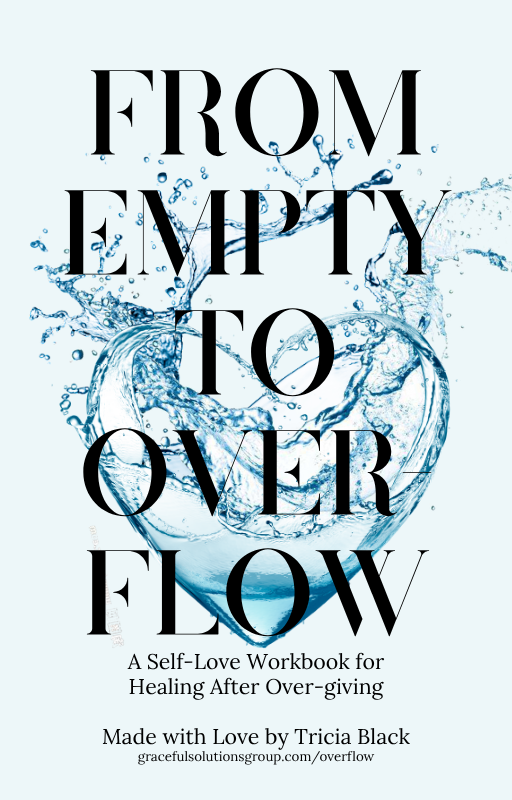
- Reflection prompts to understand your patterns
- A boundary-setting toolkit with real-life scripts
- A self-care menu to keep your energy high
- A 30-day challenge to make self-love a daily habit
📄 Instant PDF download — print it or use digitally
💡 Proceeds help fund the Signals of Grace prayer study